
Claudia Ulisses

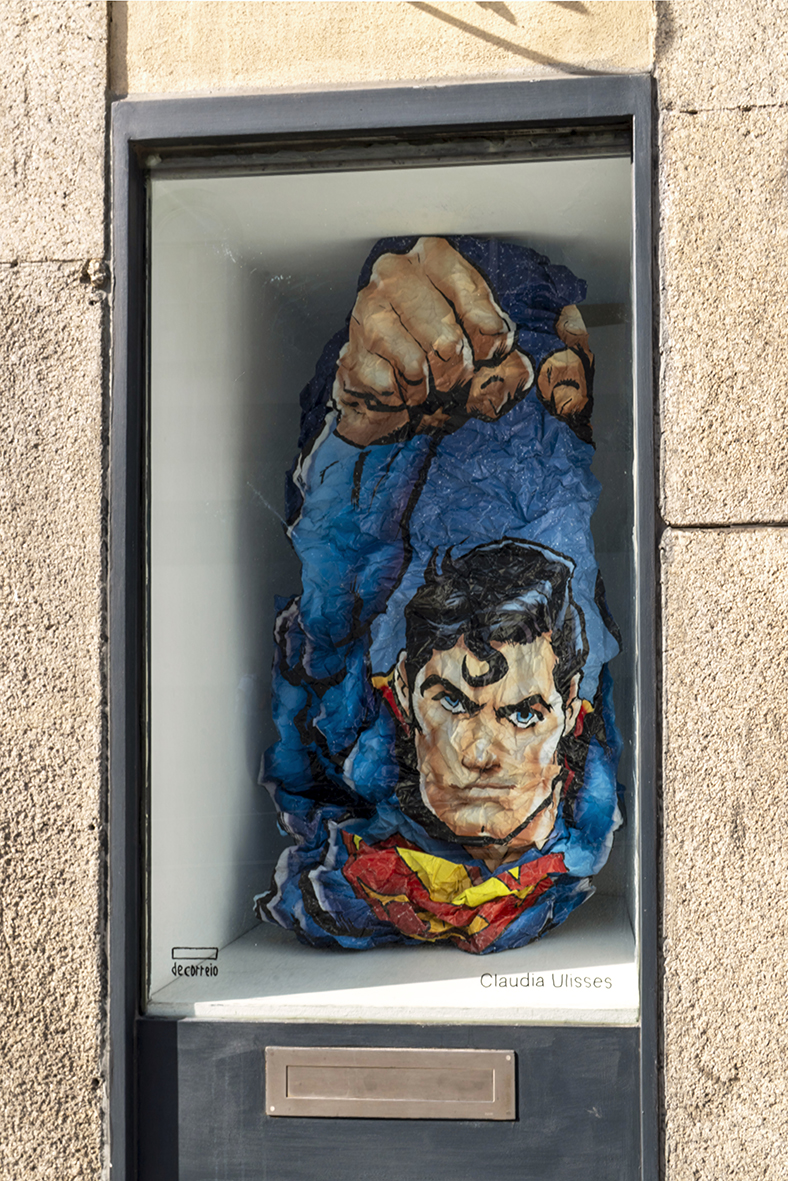
MARVEL (Series)
O Antagonista
Quando me mudei para Nova Iorque conheci o Greg, o meu colega de casa em Brooklyn. Greg era um excelente artista que ganhava a vida como art handler e quando o dinheiro não chegava vendia a sua arte nas ruas – um artista conceptual a vender arte em downtown Manhattan era surpreendente para mim!… Greg era um homem muito alto e musculado, quarenta e muitos anos, parecia saudável, mas tinha um problema na coluna, uma hérnia discal ou algo assim. Sempre que fazia esforços maiores ficava com muitas dores, o que o deixava incapacitado de se movimentar. Geralmente faltava ao trabalho e ficava de cama, imóvel, e por cada dia que não trabalhava não recebia…
Fazia-me confusão; típica europeia habituada ao “luxo” socialista da saúde publica, custou-me aceitar o facto do Greg não poder pagar o tratamento médico.
Poucos anos mais tarde Greg teve que deixar Nova Iorque, não conseguiu sustentar o preço da gentrificação de Williamsburg e regressou a Ohio (?) para ficar perto da família, mas vivia numa carrinha. Meses mais tarde foi encontrado sem vida dentro da carrinha, “vítima de ataque cardíaco” disseram-me.
Por algum tempo detestei a América!
No início eu costumava comentar com sarcasmo que os Estados Unidos estariam a produzir uma raça superior, um outro tipo de Super Homem; devido ao elevado custo dos seguros de saúde e por não terem assistência médica garantida, os americanos desenvolviam capacidades de auto cura, maior resistência à dor e sistemas imunitários superiores.
Greg e as estatísticas contrariam isso, na verdade a esperança de vida nos Estados Unidos tem vindo a decrescer.
………………….
A expressão de qualquer cultura revela-se pelos seus mitos, sobretudo nos de eleição popular… como podem ser os heróis de banda desenhada e animação, os quais são também inputs geracionais das sociedades modernas.
O Superman é um símbolo clássico da mitologia popular dos Estados Unidos (pós-colonial). Considerado por muitos como o primeiro super-herói, teve a sua primeira publicação oficial nos finais dos anos 30. Cresceu com a geração Baby Boomer e era a franca evocação do espírito valente, jovem, mas leal e justo, o ideal de uma América (EUA) redefinida pelo selo de Heróis da 2ª Guerra Mundial.
De compleição branca (…) e atlética, o Superman é o vigilante e portador da verdade – como jornalista Clark Kent – e o justiceiro supersónico, de capa vermelha e fato azul aderente (Kryptoniano), exibindo no peito o fantástico escudo com o logo S – “maximalismo gráfico” mesmo junto ao coração – que, capaz de extraordinários poderes físicos, luta contra o mal e tenta salvar a humanidade…
Durante gerações estes atributos adornaram a existência desta extraordinária figura que por muito tempo coabitou com a ascensão de outras figuras de género, sem nunca perder a aura nem o carinho do público… a ver pelas megaproduções cinematográficas, a adaptação da personagem a shows de rádio e TV, e outros franchisings que contribuíram para o frenesim de produtos de consumo associados à sua imagem e que durante décadas abasteceram lojas de rua e comércio online, (hoje ainda se editam comics do Superman, simultaneamente a sua imagem é “kitsch, collectible/rarity” no eBay – e, fun fact, o poster utilizado para a peça da Caixa de Correio foi importado do Reino Unido).
Parece-me que antigamente – antes dos Beatles – a vida dos “super-heróis” tinha um desenho mais simplificado, as lutas eram audaciosas, mas as causas eram mais fantasiosas, o reflexo de um exercício pró-entretenimento, de negação ou resignação face à realidade quotidiana … porque proveniente, talvez, de um idealismo tímido, conservador e/ou censurado, e por isso de um ativismo mais esporádico…
No caso do Superman, foi deliberada a intenção dos seus criadores, que ele simbolizasse a luta contra o fascismo e a corrupção política (no contexto político da época), que fosse um “corretor” social… Em muitas das suas aventuras ele teve um papel interventivo, na luta contra a discriminação racial, na luta pela igualdade dos cidadãos e a favor dos mais desfavorecidos. Simultaneamente, na sua essência, o Superman não é um peão político americano, mas, sobretudo em alturas de conflito, foi um apêndice conveniente de propaganda, de uma América que terá sido descrita como uma sociedade emancipada, abundante, inovadora, eficiente e idealista, com valores de liberdade e justiça social.
Os anos passaram, o inimigo ganhou complexidade, o jornalismo perdeu credibilidade e os lobbies ocuparam Krypton.
Hoje o Superman não voa sobre a América; uma América mais fragmentada e por muito tempo sonâmbula nos seus colectivos desejos (ou capacidade) de reforma, porém, sobretudo nos últimos 20 anos, engordou a lista da luta pelos direitos cívicos, com a multiplicação de grupos minoritários e sistemas de inclusão (como é o caso do reconhecimento da neuro-diversidade como vetor de integração da população neuro-divergente), com ativismo focado na justiça racial e social, na igualdade de género, nos direitos do imigrante, nos direitos do LGBTQIA2S+, nos direitos das populações indígenas, na proteção do meio ambiente, etc… e com rápido impacto na paisagem cultural, como a criação de nova terminologia – causada em parte pela estigmatização da linguagem – assim como novas estéticas, por exemplo ao nível do design urbano e da moda.
O ativismo cresceu, ramificou-se, mas, sobretudo nas últimas décadas, os seus esforços recaem também sobre a sua capacidade mobilizadora, numa sociedade demasiado distraída e hedonística… e, com o risco de se tornar na nova religião, o ativismo americano, (incluindo o não organizado, que emerge voluntariamente das páginas pessoais, nas redes sociais) assim como a proliferação de grupos minoritários mal ou bem organizados, mais ou menos exacerbados por fundamentalismo ideológico, é naturalmente o grito de socorro, mas é também um ativismo que tem operado desmembrado da desejada coesão fundamental e dos interesses universais (de uma sociedade, quando unida) em uma sociedade dividida, corporativista e politicamente hesitante nos valores e iniciativas pro-sociais … (apesar de alternativas a despontar, como é o caso do “Mamdanism”, em Nova Iorque)…
………………………..
Mas “MARVEL” prevalece, é um nome imenso! Uma paisagem de possibilidades… não podia ser um nome de flor (talvez de uma árvore), nem de um animal de estimação, de um perfume, de um talho, de uma ponte, nem de uma pasta de dentes!!… Tem que ser algo mais, como parte de uma combinação binária de um código secreto, o nome da nave em missão de paz a um novo planeta, o nome de um labirinto num jardim da antiga Alexandria… O nome da fração de tempo em que sorri ao ver a dupla que subiu ao cimo do Empire State Building e exibiu a bandeira com a frase “When the power of love beats the love of power the world knows peace”, (Quando o poder do amor ganha ao amor do poder o mundo conhece a paz).
Claudia Ulisses, Nova Iorque, Julho de 2026
.
MARVEL (Series)
O Antagonista (The Antagonist)
When I moved to New York I met Greg, my second roommate in Brooklyn. Greg was an excellent artist who made a living as an art handler. When money was tight he would sell his art on the street – the idea of a conceptual artist selling art in Midtown Manhattan amazed me! … Greg was a very tall, muscular man in his late forties, who seemed healthy but he had a spinal issue – a herniated disc, something like that. Whenever he exerted himself, he would suffer terrible pain that would leave him unable to move; he would usually miss work and stay bedridden… and for each day he didn’t work, he didn’t get paid.
At first, I was confused; as a typical European accustomed to the socialist “luxury” of public healthcare, I struggled to accept the fact that Greg couldn’t afford to pay for a medical treatment.
Few years later Greg had to leave New York, he couldn’t keep up with the rising costs of Williamsburg gentrification and returned to his hometown Ohio (?), though he was living in a van… Not long after he was found dead inside the van, the victim of a heart attack, as I was told.
For some time, I hated America!!
In the beginning I used to remark sarcastically that the US was breeding a superior race – another kind of Super Man – suggesting that, due to the high costs of medical insurance and the lack of universal healthcare, Americans were developing self-healing abilities, higher pain tolerance, and superior immune systems…
Greg and the statistics contradict this; life expectancy in the United States has actually been declining.
…………………
A culture reveals itself through its myths, especially those that are chosen by popularity —such as comic books and animated heroes, which are also generational outputs within modern societies.
Superman is a classic symbol of (postcolonial) American popular mythology. Considered by many as the first superhro, was first officially published in the late 30s. He grew up with the Baby Boomers generation and embodies a brave, spirited, youthful, yet loyal and righteous nature—the ideal of an America redefined by the heroic ethos from World War II.
White-skinned (…) and athletic, Superman is the bearer of truth—the journalist Clark Kent— as well as the supersonic crusader with a red cape and tight blue suit (Kryptonian), displaying on his chest the fantastic shield with the S logo — “graphic maximalism” right over his heart – as he wields extraordinary physical powers to fight evil and attempt to save humanity.
For generations these attributes have defined this extraordinary figure who long coexisted with the rise of other genre icons, without ever losing his aura or the public’s esteem —as evidenced by blockbuster films, the adaptation of the character to radio and Tv shows, and other franchises, contributing to the frenzy of consumer products associated with his image, which for decades supplied brick-and-mortar stores and online commerce… (Superman comics are still published today, while his image is also kitsch collectible/rarities on eBay – and, fun fact, the poster used in the “Caixa de Correio” piece was imported from the UK).
It seems to me that in the old times – before the Beatles – the lives of superheroes had a simpler design, the battles were audacious but the causes were more fanciful, reflecting a pro-entertainment exercise, a denial or resignation in the face of everyday reality… perhaps stemming from a timid, conservative and/or censored idealism and therefore resulting in a more sporadic activism…
In Superman’s case, his creators deliberately intended him to fight against fascism and political corruption (in the political context of the time), to be a social corrector. In many of his adventures, he has played an interventionist role fighting against racial discrimination, social equality, and in favor of the most disadvantaged. At the same time, at his core, Superman is not an American political pawn, but – especially in times of conflict – he has been a convenient propaganda tool for America, a society once described as emancipated, prosperous, innovative, efficient and idealistic, upholding values of freedom and social justice…
Years went by, the enemy grew more complex, blurred…journalism lost its credibility and lobbyists took over Krypton.
Today, Superman does not fly over United States – a country that is more fragmented and, for a long time, has been sleepwalking regarding its collective desires (or capacity) for reform… yet one that, especially over the last 20 years, has expanded the civil rights agenda through a proliferation of minority groups and inclusion frameworks (such as recognising neurodiversity as a vector of integrating the neurodivergent population). This shift has been driven by activism focused on racial and social justice, gender equality, the rights of immigrants, the LGBTQIA2S+ community, and Indigenous People rights, as well as environmental protection, among other causes – all of which have rapidly impacted the cultural landscape, from the creation of new terminology – stemming in part from the stigmatisation of language – to new aesthetics and developments in urban design and fashion.
Activism has grown, branched out, however, especially in recent decades, its efforts have also focused on its mobilizing capacity, within an excessively distracted and hedonistic society… and, with the risk of becoming the new religion, American activism (including the one, non organised, that emerges voluntarily from personal pages on social media), and the proliferation of minority groups, whether well-organised or not, and more or less fuelled by ideological fundamentalism, is naturally a cry for help, but it is also a form of activism that operates detached from the desired fundamental cohesion and universal interests of a society (interests that would prevail in a united society), yet absent in one that is divided, corporatist, and politically hesitant regarding pro-social values and initiatives… (despite emerging alternatives such as the “Mamdanism” in New York) …
…………………..
And “Marvel” prevail – what a massive name! A landscape of possibilities… although it couldn’t be the name of a flower (maybe a tree), a pet, a perfume, a butcher shop, a bridge, nor a toothpaste!!… It has to be something more… like part of a binary secret code, the name of a spaceship on a peace mission to a new planet, or the name of a labyrinth in a garden of ancient Alexandria!… The name for the split second when I smiled upon seeing the duo who climbed to the top of the Empire State Building and displayed the banner bearing the paraphrase “When the power of love beats the love of power the world knows peace”
Claudia Ulisses, New York, July 2026
.

.
.
Claudia Ulisses é uma artista visual portuguesa que vive e trabalha em Nova Iorque desde 2010. Cl.Ul. utiliza diversos meios, desde o vídeo e a instalação, à fotografia, pintura e desenho. O seu trabalho gira sobretudo em torno de questões relacionadas com a condição humana, o feminismo e a arte, explorando conceitos e relações de carácter social, particularmente atravessadas por espectros políticos e outros sistemas de influência social.
Claudia Ulisses is a Portuguese visual artist living and working in New York since 2010. She works across various media, ranging from video and installation to photography, painting, and drawing. Her work revolves mostly around issues concerning the human condition, feminism, and art, exploring social concepts and relationships – particularly those shaped by political spectrums and other systems of social influence.
.
Entre outras, destacam-se as seguintes exposições:
Here is a list of sellected shows, among other:
The Floating Man, Airplane room, Brooklyn, New York ▪️ A Arte Como Experiência do Real – Ivo Martins Collection in Serralves Museum, José de Guimarães International Center of Arts, Portugal ▪️ Long night of light / Young-art-night, Staatliches Textil und Industrie Museum Augsburg, Germany ▪️ Five Centuries of Drawing / Cinco Séculos de Desenho, National Museum Soares dos Reis, Portugal ▪️ Margenes de Silencio. Margins of Silence, Helga de Alvear Collection, Center for Visual Arts Helga de Alvear Foundation, Spain ▪️ Viva, Vital International Video Art Festival, Hara Museum of Contemporary Art, Tokyo, Japan ▪️ Image at Work, The Romanian Cultural Institute of Stockholm – Xposeptember 2010, Modern Museum ▪️ Index – Swedish Contemporary Art Foundation and The Romanian Cultural Institute, Stockholm, Sweden ▪️ Love Me or Leave Me, Salon – ISCP, Brooklyn, New York, USA ▪️ ANCOR Project, Armazém 3b, Lisbon, Portugal ▪️ Video art ShowCase Chiado Museum, Lisbon, Portugal ▪️ Toxic, O Discurso do Excesso, Terminal – Plano 21, Portugal ▪️ Portugal 30 artist under 40, Contemporary Portuguese Art. Stenersen Museum, Oslo, Norway ▪️ Cine y Casi Cine, Video Exhibition, M.C.A.R.S – Reina Sofia National Museum, Madrid, Spain.